Healthy Lunch Vegetable Sushi Rolls
Highlighted under: Nutritious Delights
I love preparing these Healthy Lunch Vegetable Sushi Rolls for a light and satisfying meal. The fresh ingredients and colorful presentation not only make it visually appealing but also packed with nutrients. I can customize the fillings based on what I have in the fridge, making it a versatile dish. With a quick prep time, these sushi rolls are perfect for lunch or a light dinner that I feel good about serving to my family. Plus, it's a fun activity to roll them up together!
When I first tried making sushi at home, I was surprised at how easy it was! With a few simple ingredients and a bit of practice, I soon mastered the art of rolling. I prefer using a bamboo mat, as it helps create tight rolls without much effort. The combination of fresh veggies and seasoned rice creates a delightful crunch that I can’t get enough of!
Another tip I discovered is to use sushi rice, as its stickiness makes rolling much more manageable. I also love adding a splash of rice vinegar to the rice to enhance the flavor. These rolls can easily be customized to my taste—it's all about being creative with the fillings!
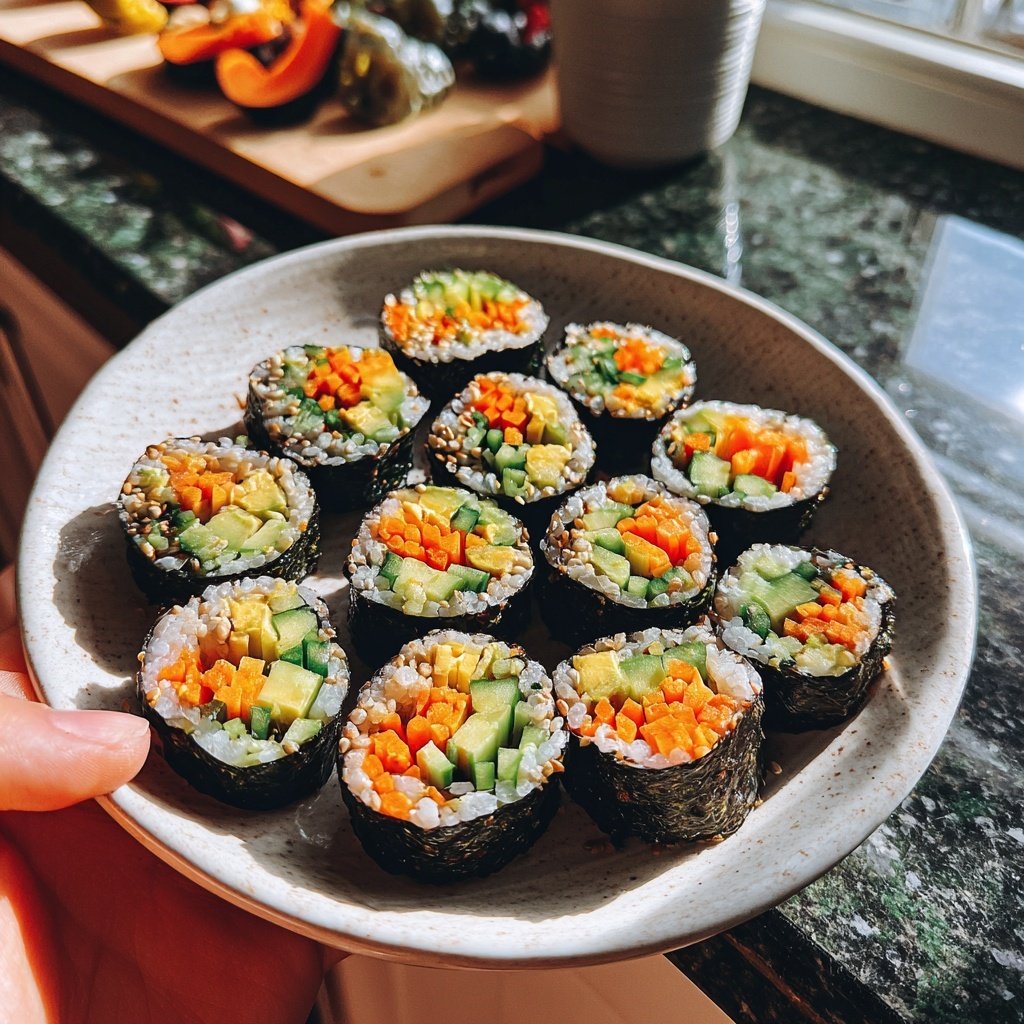
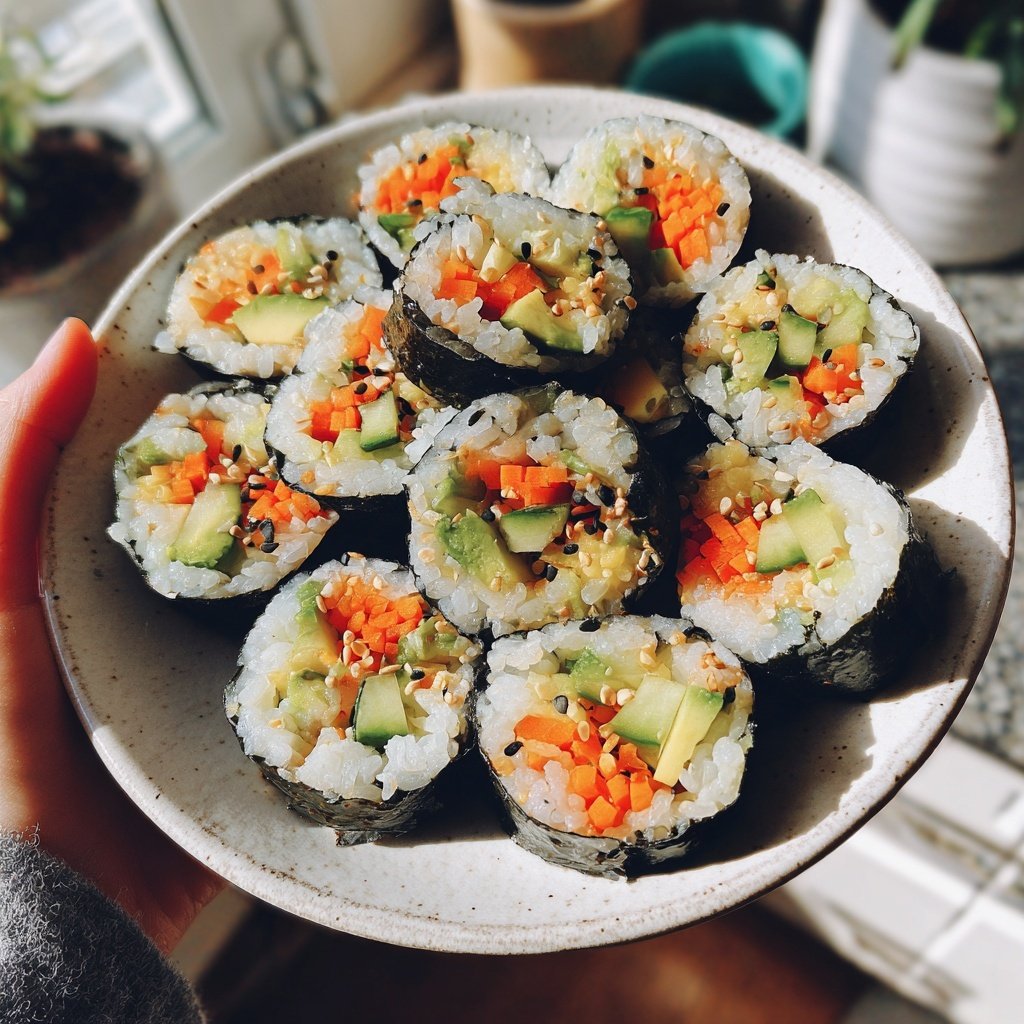
Why You'll Love These Rolls
- Fresh and vibrant ingredients that brighten up your meal
- Customizable fillings to suit every taste preference
- A light yet filling option, perfect for lunch or dinner
- Fun and engaging to make, especially with family or friends
Mastering the Sushi Rice
The foundation of any great sushi roll lies in perfectly cooked sushi rice. Rinsing the rice is crucial, as it removes excess starch that can lead to gummy, sticky rice. I typically rinse the rice for about 3-5 minutes under cold water until the water runs clear. Cooking the rice in a rice cooker ensures consistent results, but if you’re using a pot, bring the water to a boil before reducing the heat and simmering covered for 18-20 minutes, allowing the rice to rest for 10 minutes afterward for perfect texture.
Once the rice has cooled slightly, adding rice vinegar is key in creating the traditional sushi flavor. The vinegar not only adds tang but also contributes to achieving that beautiful glossy finish. For this recipe, a tablespoon of rice vinegar is a good starting point, but feel free to adjust to suit your taste. Be gentle when mixing the vinegar into the rice—using a wooden spatula can help prevent squashing the grains.
Filling Options and Flavor Balance
While the suggested vegetables are delicious on their own, I love experimenting with different fillings based on seasonal produce or what I have handy. For instance, adding some thinly sliced radish or blanched asparagus can bring extra crunch and color. If you enjoy a deeper flavor, marinated tofu or shrimp can be excellent additions; just remember to cut them into thin, manageable pieces for easy rolling. The goal is to create a balance of textures and flavors with every bite.
When layering your fillings, consider the balance of moisture. Cucumbers contain a lot of water, so pairing them with dry ingredients like bell peppers or carrots ensures your sushi doesn’t become soggy. If you're using fruits like mango or additional creamy items like cream cheese, keep them in moderation to maintain the firm structure of your rolls during slicing.
Rolling Techniques and Presentation
When rolling your sushi, a bamboo mat is your best friend for achieving that perfect cylindrical shape. Hold the mat securely but gently while you roll; this will guide the nori as you start the process. It's important to apply even pressure when rolling to avoid gaps and ensure that all ingredients are snugly enclosed. I often find it helpful to use a little water on the top edge of the nori to seal the roll neatly—just a few drops will do the trick without making it soggy.
Presentation can elevate your sushi experience. After slicing your rolls into bite-sized pieces, I like to arrange them on a platter with garnishes like sesame seeds or microgreens. These additions not only brighten the dish but also add interesting flavors. Serving with a small bowl of soy sauce, a dollop of wasabi, and thin slices of pickled ginger allows everyone to enhance their bites, making the meal feel even more engaging.
Ingredients
Gather these fresh ingredients before you start:
Sushi Ingredients
- 2 cups sushi rice
- 2 1/2 cups water
- 4 sheets nori (seaweed)
- 1 cucumber, julienned
- 1 carrot, julienned
- 1 bell pepper, thinly sliced
- 1 avocado, sliced
- Soy sauce, for serving
- Pickled ginger, for serving
- Wasabi, for serving
Make sure everything is prepped and ready to go!
Instructions
Follow these steps to create your sushi rolls:
Prepare the Sushi Rice
Rinse the sushi rice under cold water until the water runs clear. Cook the rice in a rice cooker with 2 1/2 cups of water. Once cooked, let it cool slightly and mix in a tablespoon of rice vinegar.
Lay Out the Nori
On a bamboo mat, place a sheet of nori, shiny side down. Wet your hands to prevent sticking and grab a handful of rice, spreading it evenly over the nori, leaving a small border at the top.
Add Fillings
Arrange your julienned vegetables and avocado in a line across the center of the rice-covered nori.
Roll It Up
Using the bamboo mat, gently lift the edge of the mat and start rolling away from you, creating a tight roll. Press gently to secure the roll.
Slice and Serve
Once rolled, use a sharp knife to slice the sushi into bite-sized pieces. Serve immediately with soy sauce, pickled ginger, and wasabi.
Enjoy your delicious homemade sushi!
Pro Tips
- Experiment with different vegetables or add proteins like tofu or cooked shrimp for variety. Make sure to keep your hands wet while handling the rice to prevent sticking.
Make-Ahead and Storage Tips
Sushi rolls are best enjoyed fresh, but if you want to make them ahead of time, consider wrapping the individual rolls tightly in plastic wrap to keep them moist. They can be stored in the refrigerator for up to 24 hours. However, be mindful that certain vegetables, like cucumbers, can release moisture, so they might become overly soft if left too long. As a practice, I prefer making the rolls the same day I plan to serve them to ensure optimal freshness.
If you've prepared extra sushi rice, it can be refrigerated, but it’s important to reheat it gently in the microwave with a damp paper towel to retain moisture. This will help to soften the rice before you prepare your rolls. Just be cautious not to overheat, as it can make the grains tough.
Dietary Variations and Substitutions
For those with dietary restrictions, sushi rolls can easily be adapted. If you’re looking for a gluten-free option, swap out traditional soy sauce for tamari or coconut aminos. You can also make them vegan by loading up on a variety of vegetables and using alternatives like avocado for creaminess without any animal products. There are so many exciting possibilities, so don’t hesitate to mix and match based on your dietary needs.
Additionally, if you find yourself without nori, thinly sliced vegetables like cucumber or zucchini can make a great wrap instead. These alternatives offer a fresh twist on your sushi and are perfect for those who want to keep carbs lower or simply enjoy a new flavor profile. It's about finding what combination works best for both your palate and your health goals.
Questions About Recipes
→ Can I use brown rice instead of sushi rice?
Yes, but keep in mind that brown rice may have a different texture and might require longer cooking time.
→ How do I keep the sushi rolls fresh?
Wrap them in plastic wrap and store them in the refrigerator. They’re best eaten within a few hours of making.
→ What other fillings can I use?
You can use a variety of fillings, including cooked shrimp, crab, or sautéed vegetables. Get creative!
→ Can these sushi rolls be made ahead of time?
It's best to eat sushi rolls fresh, but you can prep the ingredients ahead of time and assemble them just before serving.
Healthy Lunch Vegetable Sushi Rolls
Created by: Vanessa Doyle
Recipe Type: Nutritious Delights
Skill Level: Beginner
Final Quantity: 4 rolls
What You'll Need
Sushi Ingredients
- 2 cups sushi rice
- 2 1/2 cups water
- 4 sheets nori (seaweed)
- 1 cucumber, julienned
- 1 carrot, julienned
- 1 bell pepper, thinly sliced
- 1 avocado, sliced
- Soy sauce, for serving
- Pickled ginger, for serving
- Wasabi, for serving
How-To Steps
Rinse the sushi rice under cold water until the water runs clear. Cook the rice in a rice cooker with 2 1/2 cups of water. Once cooked, let it cool slightly and mix in a tablespoon of rice vinegar.
On a bamboo mat, place a sheet of nori, shiny side down. Wet your hands to prevent sticking and grab a handful of rice, spreading it evenly over the nori, leaving a small border at the top.
Arrange your julienned vegetables and avocado in a line across the center of the rice-covered nori.
Using the bamboo mat, gently lift the edge of the mat and start rolling away from you, creating a tight roll. Press gently to secure the roll.
Once rolled, use a sharp knife to slice the sushi into bite-sized pieces. Serve immediately with soy sauce, pickled ginger, and wasabi.
Extra Tips
- Experiment with different vegetables or add proteins like tofu or cooked shrimp for variety. Make sure to keep your hands wet while handling the rice to prevent sticking.
Nutritional Breakdown (Per Serving)
- Calories: 230 kcal
- Total Fat: 8g
- Saturated Fat: 1g
- Cholesterol: 0mg
- Sodium: 350mg
- Total Carbohydrates: 36g
- Dietary Fiber: 4g
- Sugars: 3g
- Protein: 5g