Croissant Recipes at Home
Highlighted under: Delightful Desserts
I love experimenting with homemade pastries, and perfecting the croissant has been a rewarding journey. The flaky layers and buttery texture transport me straight to a quaint Parisian café with every bite. I've found that using high-quality butter and allowing the dough to rest properly are key to achieving that beautiful rise and airy texture. With a bit of patience and practice, you can enjoy freshly baked croissants that rival any bakery right from your own kitchen.
During my quest to perfect croissants, I tried various methods, ultimately discovering that a slow, cool resting period allows the dough to develop flavor and layers. I experimented with overnight chilling, which made handling the dough so much easier, especially during lamination. This technique created the flaky texture that I had been dreaming of.
One particular tip that changed the game for me was to use a pastry brush to glaze the croissants just before baking. This gives them that golden-brown finish that's so inviting. Trust me, the aroma of baking croissants in your kitchen is an experience you won’t forget!
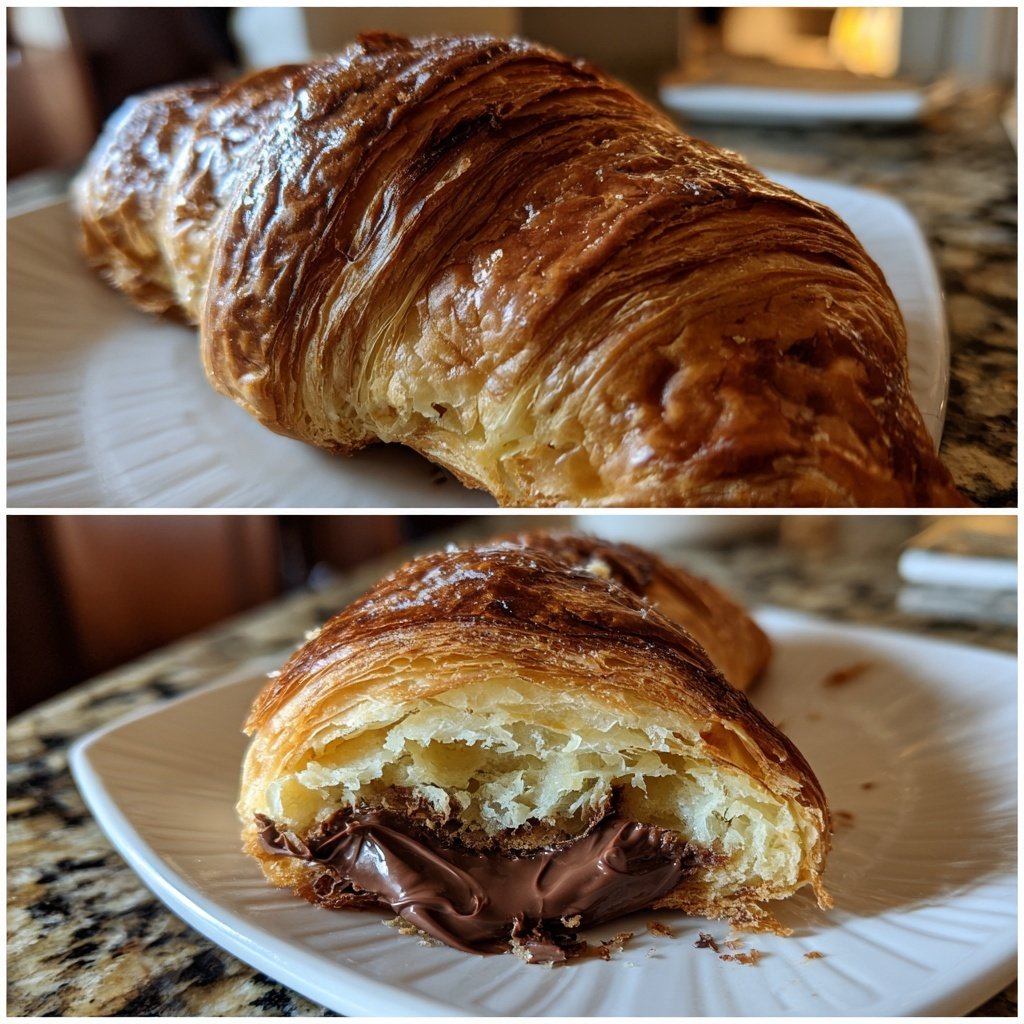

Why You Will Love This Recipe
- Deliciously flaky outer layers with a soft and airy interior
- A flexible recipe that allows customization with fillings or toppings
- The satisfaction of creating a classic pastry from scratch
Understanding the Dough Process
The dough is the foundation of a great croissant, and understanding its composition is crucial. All-purpose flour provides the necessary gluten structure while maintaining the right balance of tenderness. The yeast needs to be activated properly with warm milk, ideally around 100°F (38°C), which helps achieve the perfect rise. Make sure to knead the dough until it’s smooth and elastic; this process takes about 5 minutes. If the dough is too sticky, a light dusting of flour while kneading can help manage the texture.
After creating the dough, let it rest in the fridge for at least 1 hour. This cold resting period allows the gluten to relax, making rolling easier later on. If time permits, you can leave the dough overnight in the refrigerator, which not only improves flavor development but also enhances the texture. Just ensure it's tightly wrapped to prevent drying out.
Mastering the Butter Incorporation
The butter block is key to achieving the coveted layers in your croissants. Using high-quality unsalted butter ensures that your croissants are rich and flavorful. When rolling out the butter, it should be cold but pliable—ideally cold enough to hold its shape without crumbling. Aim for a thickness of about 1/2 inch; this will create those distinct layers when folded into the dough.
During the lamination process, be sure to roll out the dough to an even thickness of about 1/4 inch. If at any point the dough or butter feels too soft, return it to the fridge to chill for about 15 minutes. Proper chilling prevents the butter from melting into the dough, which will lead to fewer flaky layers. This technique is what gives croissants their beautiful puff and flaky texture.
Croissant Variations and Serving Ideas
Once you've mastered the basic croissant, the world of variations opens up. You can fill your croissants with chocolate, almond paste, or even savory ingredients like ham and cheese before rolling them up. Be cautious with the amount of filling; too much can make rolling difficult and lead to bursting during baking. Aim for a tablespoon of filling per croissant to maintain structure.
For serving, warm, flaky croissants pair beautifully with a spread of high-quality jams or honey, accentuating their buttery richness. You can also slice them open and fill them with cream cheese or fresh fruits for a delightful breakfast treat. Additionally, if you have leftovers, they freeze well. Just wrap them tightly in foil and store in a ziploc bag for up to a month. Reheat in a 350°F (175°C) oven for about 10-15 minutes to restore their flaky texture before serving.
Ingredients
Ingredients
For the Dough
- 4 cups all-purpose flour
- ½ cup milk, lukewarm
- ¼ cup granulated sugar
- 2 teaspoons salt
- 2 ¼ teaspoons active dry yeast
- 1 ½ cups unsalted butter (cold)
- 1 cup cold water
For the Egg Wash
- 1 egg
- 1 tablespoon milk
Ensure all ingredients are at the required temperatures before starting.
Instructions
Instructions
Prepare the Dough
In a bowl, combine warm milk, sugar, and yeast. Let it sit for 5 minutes until frothy. In a large mixing bowl, mix flour and salt. Add the yeast mixture and cold water. Combine until a dough forms. Knead for about 5 minutes until smooth. Cover and let it rest in the fridge for 1 hour.
Prepare the Butter Block
Place cold butter between two sheets of parchment paper. Use a rolling pin to flatten it into a rectangle about 1/2 inch thick. Chill in the fridge while the dough relaxes.
Layer the Dough
On a floured surface, roll out the dough into a rectangle. Place the butter block in the middle and fold the dough over to encase it. Roll out again to another rectangle, then fold into thirds. Repeat this process two more times, chilling for 30 minutes between each fold.
Shape the Croissants
After the final fold, roll the dough into a large rectangle, and cut it into triangles. Starting from the wide end, roll them up towards the point. Place them on lined baking sheets and let rise for about 2 hours.
Bake the Croissants
Preheat your oven to 400°F (200°C). Whisk together the egg and milk for the wash, and brush it on the croissants. Bake for 20-25 minutes until golden brown. Cool on a wire rack before enjoying.
Serve warm for the best experience!
Pro Tips
- For an added touch, consider filling your croissants with chocolate, almond paste, or ham and cheese before rolling them up. Experimenting with different fillings can enhance your croissant experience significantly.
Troubleshooting Common Issues
If your croissants don’t rise as expected, it may be due to inactive yeast. Always check the expiry date of the yeast, and ensure the liquid used to activate it isn’t too hot, as this can kill the yeast. The dough should also feel slightly tacky but not overly sticky; adjust flour as needed during the mixing process for the right consistency.
Another common issue is butter leaking during baking. If this happens, it’s often due to the butter being too soft. Ensure your butter is cold and properly encased in the dough. If you notice leakage, reduce the oven temperature slightly to allow for even baking without further leakage.
Making Ahead and Storage
If you're planning to make croissants ahead of time, you can prepare the dough and shape the croissants a day in advance. Once shaped, instead of letting them rise at room temperature, cover them and let them rise overnight in the refrigerator. This slow rise enhances flavor and texture. When ready to bake, simply egg wash and bake them straight from the fridge, though you may need to add a few minutes to the baking time.
For longer storage, baked croissants can be frozen. Allow them to cool completely, then wrap them tightly in plastic wrap followed by aluminum foil. They can be stored in the freezer for up to a month. To reheat, place them in a preheated oven at 350°F (175°C) for about 10-12 minutes, which will restore their delightful texture and warmth.
Adjusting Serving Sizes
If you're hosting an event and need a larger batch of croissants, this recipe can be easily scaled up. Simply multiply each ingredient by the number of croissants you wish to make, while maintaining the same method for incorporating the butter and folding the dough. Just be mindful that larger batches may require additional chilling time during the dough resting phases.
For smaller servings, you can also halve the recipe to make fewer croissants. Just ensure that you adequately adjust the proofing times, as smaller quantities may rise faster. Ultimately, the beauty of this recipe is its flexibility, allowing you to create just the right amount for your needs.
Questions About Recipes
→ Can I freeze unbaked croissants?
Yes, you can freeze the shaped, unbaked croissants. Flash freeze them on a baking sheet before transferring to a freezer bag. Bake them straight from the freezer, adding a few extra minutes to the baking time.
→ Why is my croissant dough too sticky?
If your dough is too sticky, try adding a little more flour while kneading, but be cautious not to overdo it, as that can affect the texture.
→ How do I know when my croissants are done baking?
They should be golden brown and have a nice, flaky texture. You can also tap the bottom; it should sound hollow.
→ What’s the best way to store leftover croissants?
Store them in an airtight container at room temperature for up to two days. For longer storage, wrap them tightly and freeze.
Croissant Recipes at Home
Created by: Vanessa Doyle
Recipe Type: Delightful Desserts
Skill Level: Intermediate
Final Quantity: 12 croissants
What You'll Need
For the Dough
- 4 cups all-purpose flour
- ½ cup milk, lukewarm
- ¼ cup granulated sugar
- 2 teaspoons salt
- 2 ¼ teaspoons active dry yeast
- 1 ½ cups unsalted butter (cold)
- 1 cup cold water
For the Egg Wash
- 1 egg
- 1 tablespoon milk
How-To Steps
In a bowl, combine warm milk, sugar, and yeast. Let it sit for 5 minutes until frothy. In a large mixing bowl, mix flour and salt. Add the yeast mixture and cold water. Combine until a dough forms. Knead for about 5 minutes until smooth. Cover and let it rest in the fridge for 1 hour.
Place cold butter between two sheets of parchment paper. Use a rolling pin to flatten it into a rectangle about 1/2 inch thick. Chill in the fridge while the dough relaxes.
On a floured surface, roll out the dough into a rectangle. Place the butter block in the middle and fold the dough over to encase it. Roll out again to another rectangle, then fold into thirds. Repeat this process two more times, chilling for 30 minutes between each fold.
After the final fold, roll the dough into a large rectangle, and cut it into triangles. Starting from the wide end, roll them up towards the point. Place them on lined baking sheets and let rise for about 2 hours.
Preheat your oven to 400°F (200°C). Whisk together the egg and milk for the wash, and brush it on the croissants. Bake for 20-25 minutes until golden brown. Cool on a wire rack before enjoying.
Extra Tips
- For an added touch, consider filling your croissants with chocolate, almond paste, or ham and cheese before rolling them up. Experimenting with different fillings can enhance your croissant experience significantly.
Nutritional Breakdown (Per Serving)
- Calories: 240 kcal
- Total Fat: 15g
- Saturated Fat: 10g
- Cholesterol: 50mg
- Sodium: 120mg
- Total Carbohydrates: 24g
- Dietary Fiber: 1g
- Sugars: 1g
- Protein: 4g